
Order too much gravel and you pay for stone you will never spread. Order too little and the project stalls halfway.
Free gravel calculator — cubic yards, tons and cost in under a minute.
Order too much gravel and you pay for stone you will never spread, with a leftover pile sitting in your yard for months. Order too little and the project stalls halfway, while you pay a second delivery fee and wait days for another truck. Our gravel calculator removes that guesswork, so figuring gravel for any project becomes a two minute job instead of a gamble. Enter your coverage area in square feet and your depth in inches, and this gravel estimator returns the cubic yards and short tons you need, using a material density of about 105 lb/ft³, plus a rough cost estimate. Below the tool you will find the gravel calculator yards formula, coverage and weight tables, and straight answers to the questions buyers ask most.
Quick answers
- 1 cubic yard = 27 cubic feet.
- Standard gravel weighs about 1.4 short tons per cubic yard.
- 1 cubic yard covers 324 sq ft at 1 inch deep.
- Add 10% extra for compaction, settling and waste.
Gravel Calculator
Work out how much gravel you need — in cubic yards, tons and bags — for a driveway, path, patio or drainage project.
1. Area & depth
2. Material
3. Prices (optional)
You need
Formula: Volume = Area × Depth · Weight = Volume (cu ft) × Density · 1 cu yd = 27 cu ft · 1 short ton = 2,000 lb.
How far does one cubic yard go?
| Depth | Area covered per cubic yard |
|---|---|
| 1 in | 324 sq ft |
| 2 in | 162 sq ft |
| 3 in | 108 sq ft |
| 4 in | 81 sq ft |
| 5 in | 64.8 sq ft |
| 6 in | 54 sq ft |
Rule of thumb: area covered per cubic yard = 324 ÷ depth in inches.
How Much Gravel Do I Need?
The first problem is a units problem, because suppliers sell gravel by weight in short tons or by volume in cubic yards, while your project is measured in feet and inches. The calculator bridges that gap, but it helps to understand the three numbers behind every order: area, depth and density. Get those three right and the rest of the ordering process becomes simple arithmetic. Get one of them wrong and the whole load is wrong with it.
Start by measuring the length and width of the area in feet, which gives you the coverage area in square feet. If the ground is uneven, measure the depth in several spots and use the average, because one deep corner can hide a surprising amount of extra stone. For irregular shapes, split the area into rectangles, circles or triangles and measure each piece on its own. Add the pieces together and you have one reliable total area to feed into the formula below.
The gravel formula
- Area = length × width (in feet), giving square feet.
- Volume in cubic feet = area × (depth in inches ÷ 12).
- Cubic yards = cubic feet ÷ 27, because 1 cubic yard = 27 cubic feet.
- Short tons = cubic yards × tons per cubic yard for your material, about 1.4 for standard gravel at 105 lb/ft³.
- Order quantity = add 10% for compaction and overage, then round up.
Worked example: a 20 by 10 ft driveway
Suppose you are building a driveway 20 feet long and 10 feet wide, with a 4 inch layer of #57 crushed stone. The step by step math below shows exactly how the calculator reaches its answer, so nothing about the result is a mystery. You can also check any supplier quote against this same five step method before you agree to a price.
- Area = 20 × 10 = 200 sq ft
- Volume = 200 × (4 ÷ 12) = 66.7 cu ft
- Cubic yards = 66.7 ÷ 27 = 2.47 cu yd
- Weight = 2.47 × 1.42 = about 3.5 short tons
- With 10% overage = 3.5 × 1.10 = about 3.85, so order about 4 tons
Gravel Types Covered by the Calculator
The next problem is that a cubic yard of one material does not weigh the same as a cubic yard of another. The calculator solves this by adjusting the tons per yard figure to the material you select from the preset list. The volume of your project never changes from one material to the next. Only the weight changes, and weight is what decides both the delivery size and the final bill.
- Crushed stone (#57) at 105 lb/ft³ (about 1.42 tons/yd³). Angular pieces lock together tightly, which makes this the standard choice for driveway bases and under slab work.
- Pea gravel at 96 lb/ft³ (about 1.30 tons/yd³). Small, smooth and comfortable underfoot, which makes it ideal for paths, patios and landscaping.
- Bank-run gravel at 130 lb/ft³ (about 1.76 tons/yd³). A natural mix of stone, sand and fines that works well for general fill and base courses.
- River rock at 105 lb/ft³ (about 1.42 tons/yd³). Smooth decorative stone that suits dry creek beds and drainage areas.
- Crusher run at 135 lb/ft³ (about 1.82 tons/yd³). Dense graded material that compacts into a hard surface for road and driveway bases.
- Decomposed granite at 125 lb/ft³ (about 1.69 tons/yd³). A natural, firm surface material for paths, patios and xeriscaping.
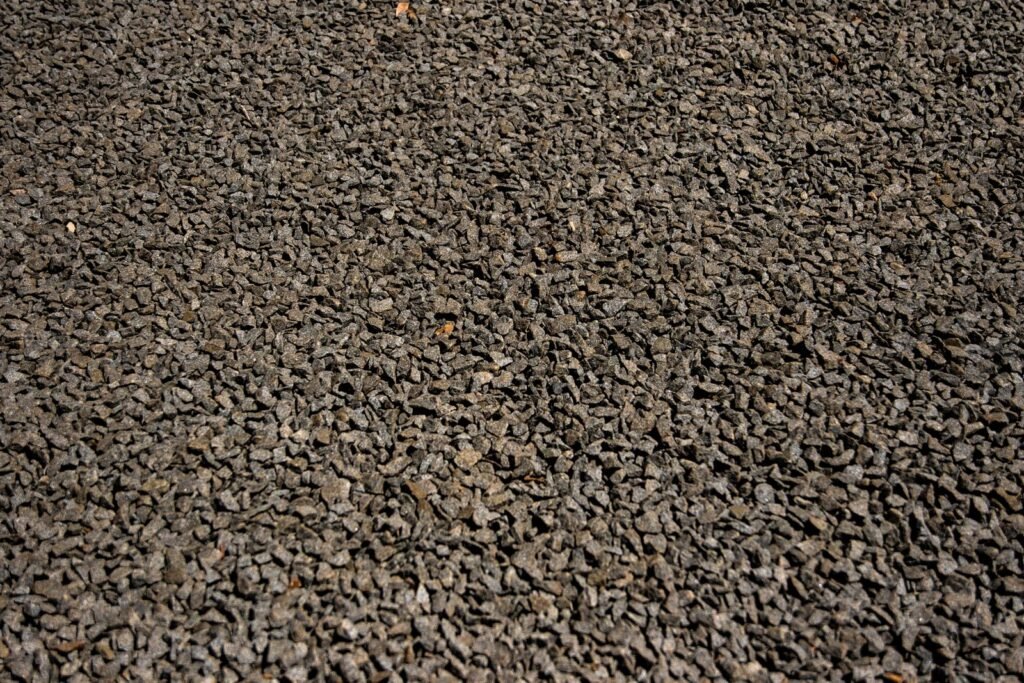
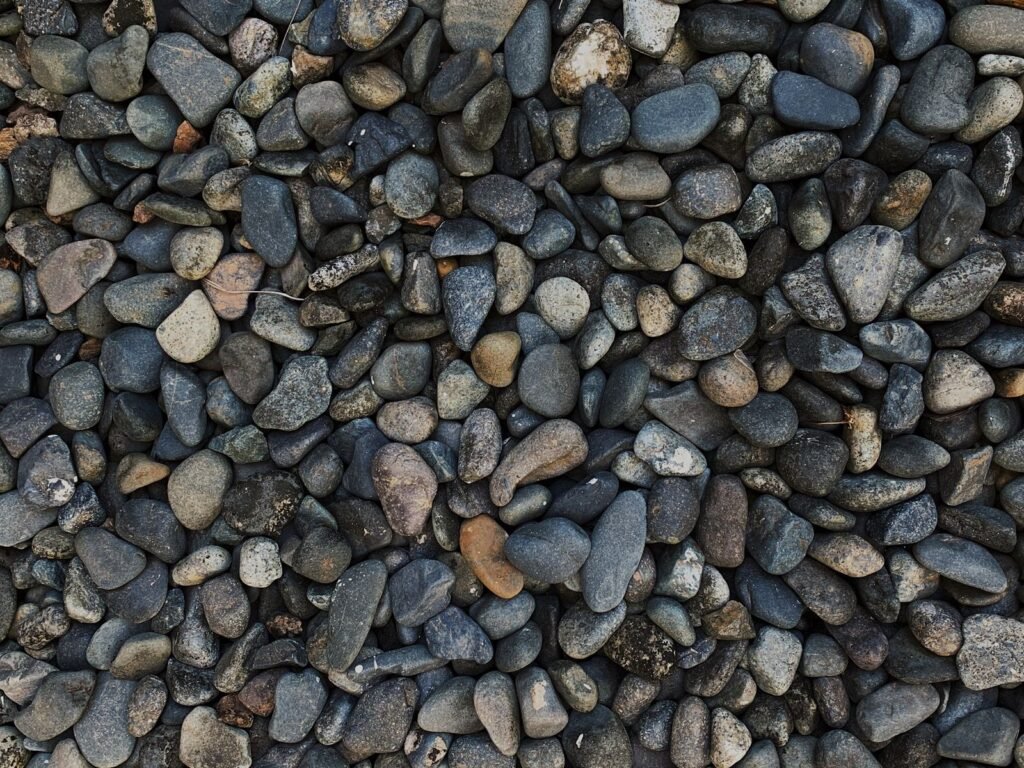
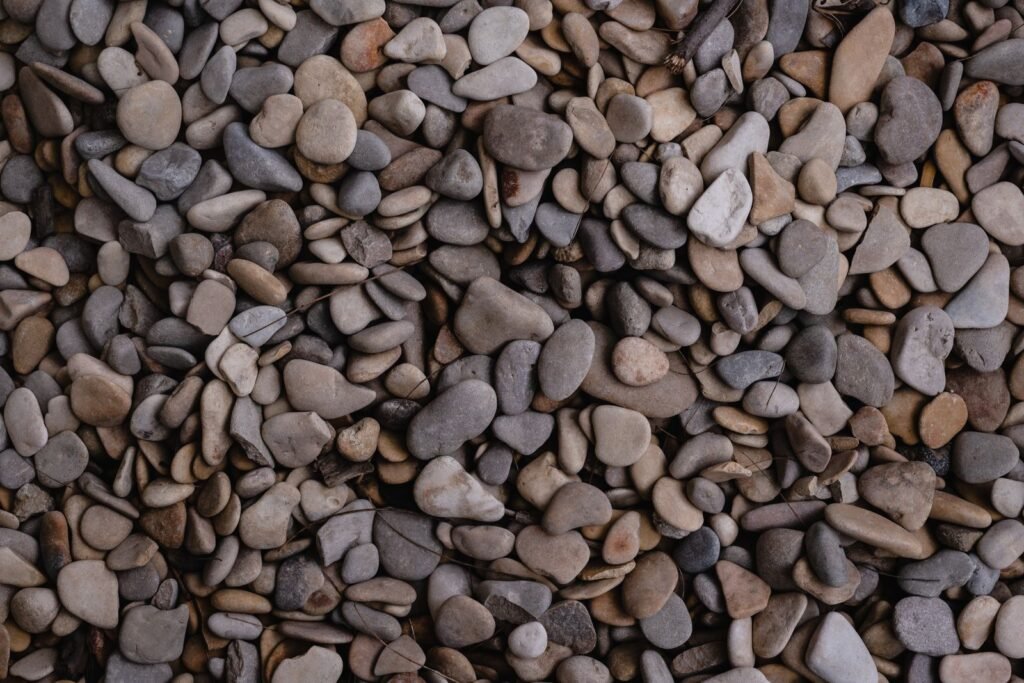
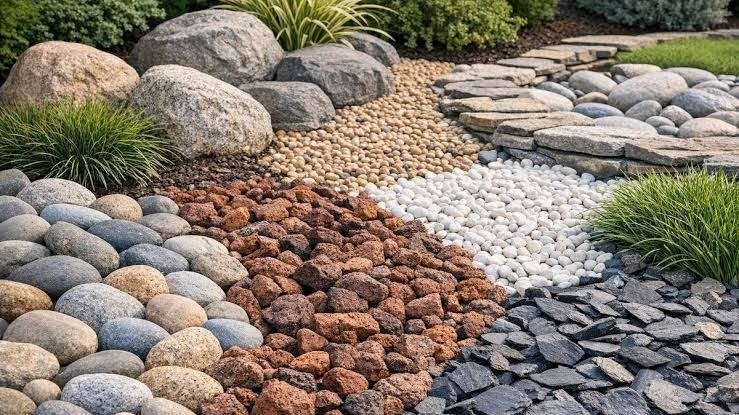
These densities are planning figures rather than laboratory values, because bulk density shifts with rock type, gradation and moisture. A load that arrives wet will weigh more than the same load delivered dry in the middle of summer. Confirm the density with your supplier before placing a large order, especially if you are paying strictly by the ton.
Gravel Coverage & Weight Reference
Sometimes you do not need the full calculation, just a fast sanity check before you phone the supplier. The three rules of thumb below answer most quick questions about coverage and weight. The tables under them give the same figures worked out for common project sizes and common materials. Keep them open while you compare quotes, because a quote that clashes with these numbers deserves a second look.
- 1 cubic yard = 27 cubic feet and covers 324 sq ft at 1 inch deep.
- 1 ton of gravel covers about 100 sq ft at 2 inches deep.
- Standard gravel at 105 lb/ft³ weighs about 1.4 short tons per cubic yard.
Coverage table: cubic yards (short tons) needed, #57 crushed stone
| Coverage area | 2″ deep | 3″ deep | 4″ deep |
|---|---|---|---|
| 100 sq ft | 0.62 yd³ (0.9 t) | 0.93 yd³ (1.3 t) | 1.23 yd³ (1.8 t) |
| 200 sq ft | 1.23 yd³ (1.8 t) | 1.85 yd³ (2.6 t) | 2.47 yd³ (3.5 t) |
| 400 sq ft | 2.47 yd³ (3.5 t) | 3.70 yd³ (5.3 t) | 4.94 yd³ (7.0 t) |
| 500 sq ft | 3.09 yd³ (4.4 t) | 4.63 yd³ (6.6 t) | 6.17 yd³ (8.8 t) |
| 1,000 sq ft | 6.17 yd³ (8.8 t) | 9.26 yd³ (13.1 t) | 12.35 yd³ (17.5 t) |
Weight per cubic yard by material
| Material | Density | Tons per cubic yard |
|---|---|---|
| Pea gravel | 96 lb/ft³ | 1.30 |
| Crushed stone (#57) | 105 lb/ft³ | 1.42 |
| River rock | 105 lb/ft³ | 1.42 |
| Decomposed granite | 125 lb/ft³ | 1.69 |
| Bank-run gravel | 130 lb/ft³ | 1.76 |
| Crusher run | 135 lb/ft³ | 1.82 |
Compaction & Overage: Add 10%
Even a perfect calculation loses stone in the real world, and this is the problem most first time buyers miss. Some gravel spills during delivery, some spreads thinner over low spots, and the finished layer settles as it compacts under its own weight. Ordering at least 10% extra covers all three of those losses in one simple step. Multiply your calculated tons by 1.10 and round up to the nearest whole ton, because suppliers do not deliver fractions of a load. If the layer will be machine compacted, ask your supplier what compaction factor to use for that material, since a compacted driveway base can shrink noticeably more than a loose decorative layer.
Common Gravel Ordering Mistakes
The first common mistake is measuring the depth in inches and then forgetting to convert it into feet before multiplying. That single slip can inflate or shrink the volume twelvefold, and it sits behind most wildly wrong orders. The second mistake is ignoring compaction and ordering the exact calculated figure, then watching the finished layer sit lower than planned. The third mistake is choosing rounded pea gravel as a driveway driving surface, where it rolls and ruts under tires instead of locking in place like angular crushed stone does.
Estimate Your Gravel Cost
Once the tonnage is settled, the cost problem turns into straightforward multiplication. Your material cost is simply the tons you need multiplied by the price per ton your supplier charges. Enter that price per ton in the calculator above and it returns an instant total for the material itself. Comparing two suppliers then takes seconds, because you are comparing the same tonnage at two different rates.
Material price is only part of what you will actually pay, so budget for the rest before you commit. Delivery fees, minimum order charges, excavation, grading and landscape fabric are usually billed as separate line items. Most suppliers sell in bulk and deliver by dump truck, which is why a small order can carry a delivery fee that rivals the material cost itself. Ask for the full delivered price, and check whether your order meets the minimum load, before you accept any quote.
You now have the method, the reference tables and the mistakes to avoid, so the only step left is your own project. Run your measurements through the calculator above and you will have your cubic yards, short tons and cost estimate in under a minute. If you want to dig deeper first, our upcoming guides on the types of gravel and gravel driveway cost break both of those decisions down step by step.
Frequently Asked Questions
Measure your area in square feet and choose a depth in inches, using 2 to 3 inches for paths and decorative beds and 4 to 6 inches for driveways. Multiply the area by the depth in feet, then divide by 27 to get cubic yards. Multiply the cubic yards by the tons per cubic yard for your material to get the weight you need to order. If you would rather skip the math, enter the same numbers into the gravel calculator above and read the result directly.
Split the area into simple shapes such as rectangles, circles and triangles, then work out the square footage of each piece. For a circle, multiply pi by the radius squared, and for a triangle, multiply the base by the height and divide by two. Add the pieces together to get one total area in square feet. Then apply the standard formula: cubic yards equals total square feet times depth in inches, divided by 12, divided by 27.
The volume side of the calculation is exact, because it is pure geometry based on your own measurements. The weight side is a planning grade estimate, because real material density varies with the quarry, the gradation and the moisture in the load. Two loads of the same stone can differ by several percent in weight per cubic yard. Confirm the density with your supplier before placing a large order and the estimate will serve you well.
The answer depends on the material, because each stone type packs a different weight into the same cubic yard. Standard crushed stone at 105 lb/ft³ works out to about 1.4 short tons per cubic yard. Lighter pea gravel comes in at about 1.3 tons, while dense crusher run reaches about 1.8 tons. Check the weight table above for the exact figure for the material you plan to order.
One ton of gravel covers about 100 square feet at a depth of 2 inches. Deeper layers cover proportionally less ground, roughly 65 to 75 square feet at 3 inches and about 50 square feet at 4 inches. The exact coverage also depends on the stone size and on how much the layer compacts after spreading. When in doubt, plan with the deeper figure so you do not run short at the far end of the project.
For walkways, patios and decorative landscaping, a layer of 2 to 3 inches is usually enough. Driveways and parking areas need 4 to 6 inches of compacted depth, often built as a dense base layer with a thinner angular surface course on top. Soft or poorly drained soil may need a deeper section to spread the load and stop the stone from sinking. If your ground is very soft, check with a local contractor before you commit to a depth.
Bulk gravel is delivered by dump truck and priced per ton, so the load is defined by weight rather than by the size of the truck bed. A full size pickup can typically carry around a ton, while commercial dump trucks haul many tons in a single load. Most residential projects therefore need only part of one truckload, which is why minimum order charges exist. Ask your supplier about the delivery fee, the minimum order and how the truck will access your site before you book.